
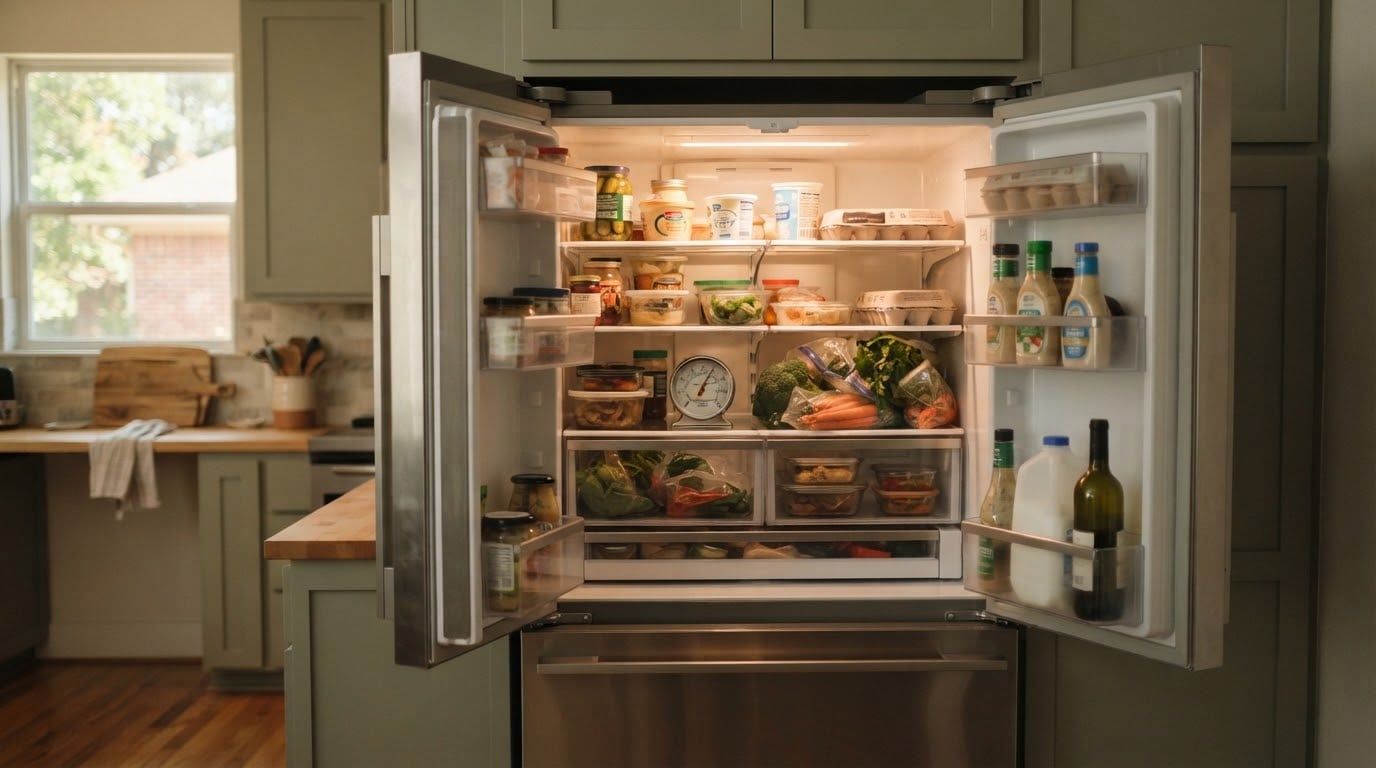
Refrigerator not cooling: which part is behind it
When a Samsung, LG, Whirlpool, GE or Frigidaire refrigerator stops holding temperature, the fault usually sits in a short list of parts: the evaporator fan, the condenser fan and coils, the defrost heater and sensor, the door gasket, the start relay or the compressor. The FDA wants the fresh-food side at 40°F or colder and the freezer at 0°F, so if you've got an appliance thermometer in there, give us the reading.
Fridge warm on the fresh-food side, freezer still frozen
Fridge and freezer both creeping warmer by the day
Fridge clicks every few minutes and nothing gets cold
Frost growing on the freezer's back wall
Fridge leaking under the crisper drawers or onto the floor
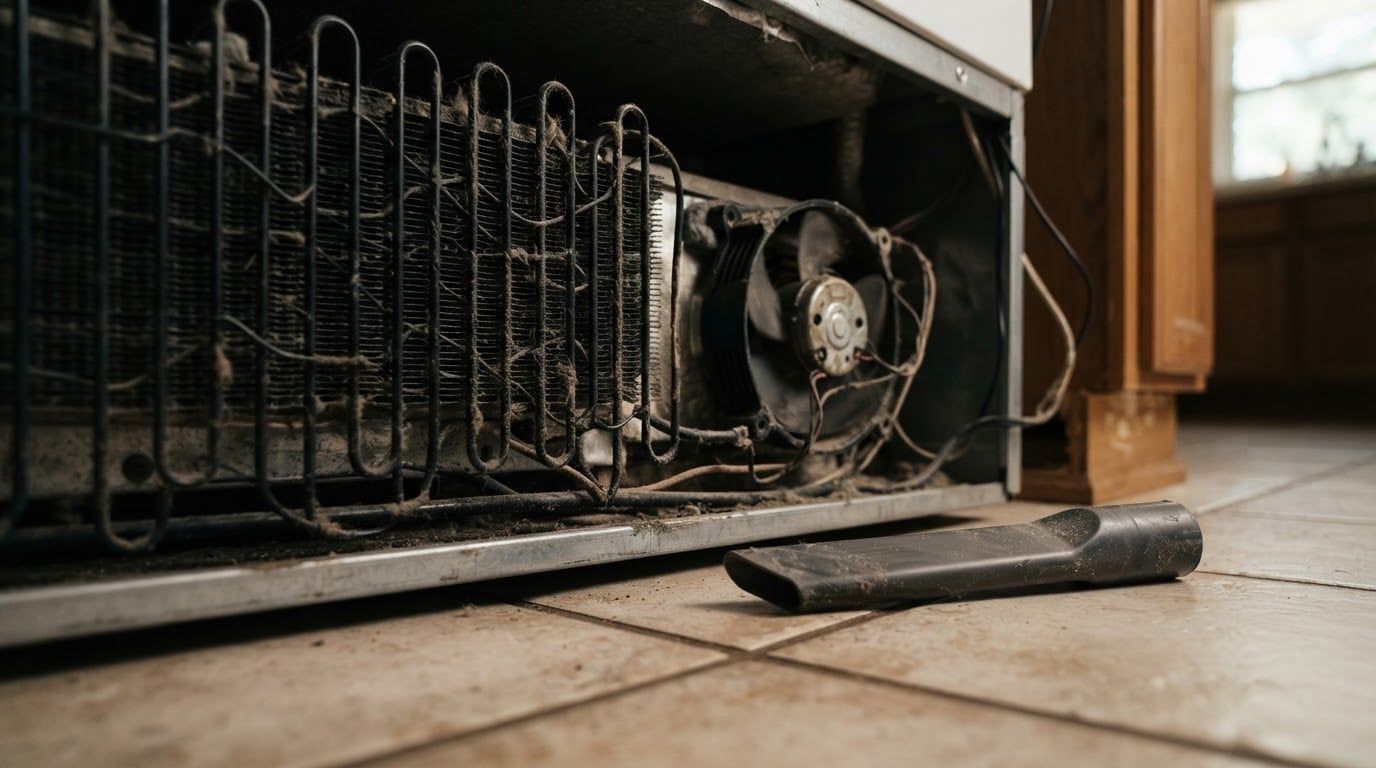
Refrigerator repair with a full load of food
Do these while you wait for the visit. They save the food and keep water off the floor.
- Keep both doors closed. FDA guidance gives a shut fridge about 4 hours of safe cold, a packed freezer roughly 48 and a half-empty one around 24.
- Once the fridge has been warm a while, shift milk, meat and leftovers into a cooler with ice. The FDA's power-outage tips say perishables that sat above 40°F for 2 hours or more should go.
- Water spreading on the floor? Close the fridge's water supply valve, behind the unit or under the sink, and lay towels down.
- Clicking with no cooling? Unplug it so the compressor stops straining to start.
- Then call with the brand and whether the freezer side is still holding cold.
Refrigerator error code repair
Samsung's guidance is to leave most refrigerator codes in place, without unplugging or clearing them, so the tech can read them on the visit. Leave yours showing and read it to us when you call. Every other refrigerator and laundry code is in the appliance error code library.
| Code | What it means | What the tech checks |
|---|---|---|
OF OF | Samsung: cooling switched off (showroom demo mode). Lights work, compressor never runs | Confirms the mode, turns cooling back on and watches the cabinet pull down |
5E | Samsung: fridge defrost sensor error | Defrost sensor, defrost heater and the frost load on the evaporator |
21E / 22E | Samsung: freezer fan or fridge fan error, often a fan locked in ice | Ice around the fan blades, gaps in the door seal, then the fan motor |
84C | Samsung: compressor locked | Start relay and overload first, then the compressor windings |
83E / 85E / 86E | Samsung: compressor current or voltage fault, common after a surge or brownout | Voltage at the outlet, the main board and the compressor circuit |
dH | LG: the defrost cycle ran over an hour without warming the evaporator to its target | An iced evaporator, the defrost heater and the sensor |
FF / rF | LG: freezer fan or fridge fan fault | Fan motor, wiring and ice packed around the blades |
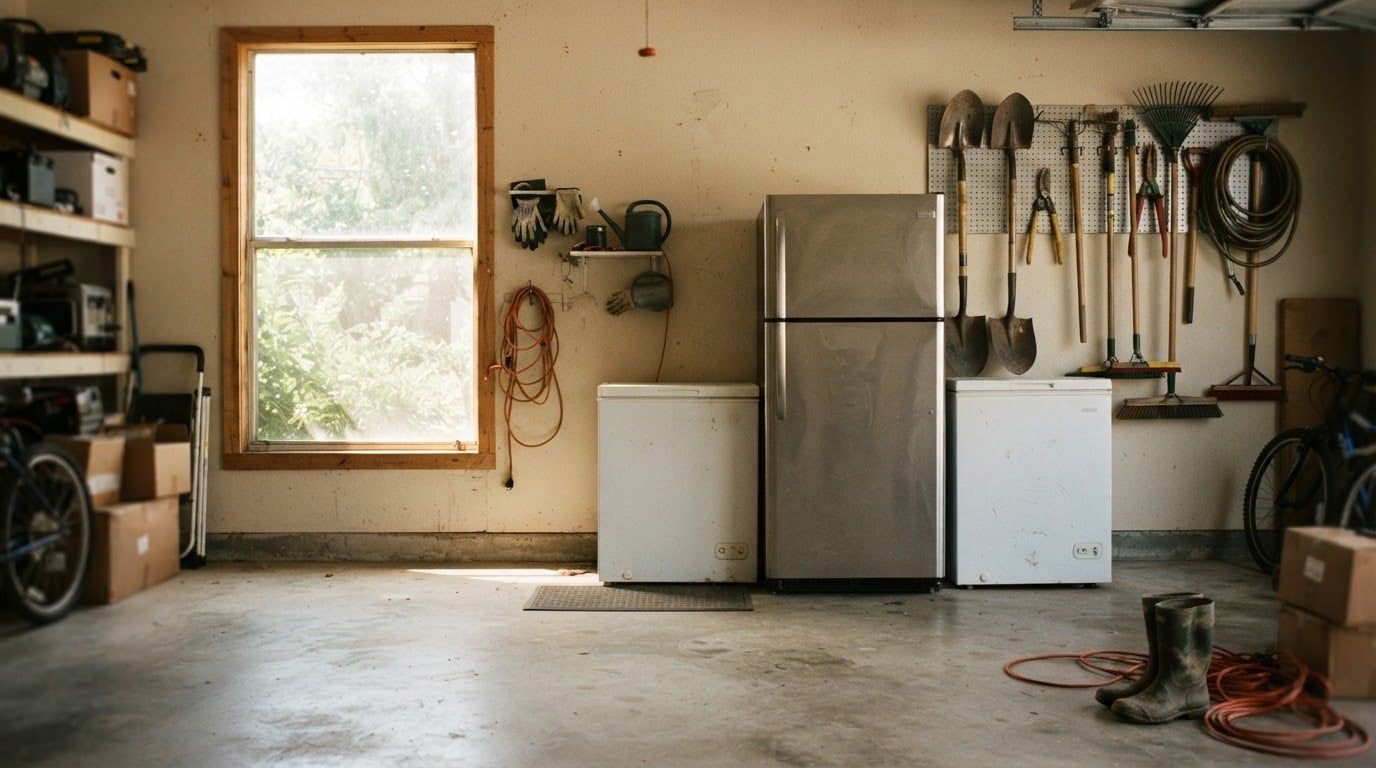
Garage refrigerator repair in Houston heat
Plenty of Houston garages hold a second fridge or a chest freezer, and summer pushes them hard. NOAA's normals for Bush Intercontinental show roughly 111 days each year reaching 90°F, and Whirlpool cautions that a standard model kept somewhere hot may run excessively, use more power and wear its components.
Models sold as garage-ready are built for it. GE's garage-ready top-freezers and Samsung's garage-ready top-freezer are rated from 38 up to 110 degrees. On Whirlpool models the normal setting covers rooms from 55 up to 110, and some add a Garage Mode for spells between 38 and 55. Ranges vary by model, so the manual for yours has the final word.
Tell us it lives in the garage. The tech checks what range the model is rated for along with the condenser fan and coils, since a new part on a fridge that isn't built for the space may not end the long run times.
Refrigerator compressor and sealed system repair
Compressor, evaporator and refrigerant leak jobs sit at the top of the price table, and they're also where refrigerator warranties run longest. Give us the brand and a rough purchase date on the call.
Samsung gives sealed systems 5 years on parts and labor, and its digital inverter compressor 10 years on parts with 5 years on labor. Whirlpool covers the sealed system, parts and labor, in years 2 to 5. Maytag's limited 10-year parts coverage takes in the refrigerator compressor, parts only after the first year. LG covers its linear or inverter compressor on parts for up to 10 years, but its sealed-system terms change from model to model, and so do GE's and Frigidaire's. The warranty card for your model settles it.
Brand-by-brand terms are on the LG appliance repair, Samsung appliance repair, Whirlpool appliance repair and GE appliance repair pages. Opening a sealed system means handling refrigerant, which needs an EPA-certified tech, and how a repair visit works covers that rule.
What refrigerator and freezer repairs cost
National averages, with parts and labor included unless the note says different. Once the tech has found the fault, you get the price for your fridge in writing, and no part goes in until you've said yes.
| Repair | Typical range | Notes |
|---|---|---|
| Trip and diagnosis | $70 to $130 | Usually covers the trip, the diagnostic work and an hour of labor |
| Condenser coil cleaning | $70 to $130 | |
| Door gasket | $100 to $300 | |
| Thermostat | $100 to $400 | |
| Defrost heater | $120 to $400 | Upright or chest freezer: $150 to $350 |
| Freezer defrost timer | $100 to $225 | |
| Condenser fan motor | $200 to $350 | |
| Evaporator fan motor | $250 to $400 | Motor alone is $30 to $150 |
| Water inlet valve | $100 to $250 | Fridges with ice and water |
| Main control board | $400 to $750 | Board alone is $100 to $300 |
| Refrigerant leak repair | $400 to $1,100 | |
| Compressor | $700 to $1,250 | Upright or chest freezer: $400 to $800 |
A new fridge runs $675 to $2,500 nationally, and that's what to set a compressor quote beside. The appliance repair cost guide lists washers, dryers and the rest of the kitchen.
Repair or replace an older refrigerator
Start with life expectancy and cost. Industry estimates compiled by NAHB give a full-size refrigerator about 13 years, and Consumer Reports advises against spending more than half of what a new one costs. National cost guides add age and warranty to the test, and the repair or replace guide lays all three rules side by side.
Put real repairs through it. A $300 evaporator fan on a six-year-old fridge is an easy yes. A $1,100 compressor on a 12-year-old fridge lands near or past half the price of a mid-range replacement, on an appliance close to the end of its expected life, so replacing usually wins.
Energy savings won't tip a close call. ENERGY STAR puts certified refrigerators about 9% ahead of the federal minimum and estimates around $150 saved over 12 years. The exception runs the other way: a built-in or counter-depth fridge has to fit the cabinet opening it sits in, so a repair that's too pricey on a freestanding model can still make sense there.
Finding your refrigerator's model number
Give us the brand and the model number when you call. On most fridges the label is inside the fresh-food compartment, on a side wall or the ceiling. French door and side-by-side units carry the most electronics, so a photo of the control panel helps too. If only the ice or water side is acting up, the ice maker repair page covers the fill valve, tubing and filter.
Refrigerator repair around Houston and nearby cities
We take fridge and freezer calls from Houston neighborhoods like Meyerland, Sharpstown, the Heights and Alief, and from parts of Sugar Land, Missouri City, Stafford and Bellaire. Every covered ZIP is on the service areas page. Don't see your ZIP? Call anyway and we'll check your address.
Refrigerator repair questions from Houston homes
What does a fridge repair usually run in Houston?
Most repairs land between $125 and $500 by national averages, with the typical bill near $300. Fans, gaskets and defrost parts usually sit inside that range. Sealed-system work runs $400 to $1,250. You'll see the number for your fridge in writing once the tech has found the fault.
Fridge side warm, freezer side fine: is the compressor going?
Usually not. A freezer holding 0°F tells you the compressor and refrigerant are doing their job. On most single-evaporator models the trouble is getting that cold air into the fresh-food side: a stopped fan, a stuck damper or a coil iced over by a failed defrost part.
Should I fix a refrigerator that is ten years old?
For anything short of the sealed system, usually yes. A standard fridge is expected to last about 13 years, so a fan, gasket or defrost repair at ten tends to pay off. A compressor at that age is a closer call. Hold the quote against half of what its replacement would cost.
Should I unplug a fridge that keeps clicking?
Yes, if it clicks every few minutes and nothing is getting cold. That sound is usually the compressor failing to start, and every attempt wears on it. Move the perishables to a cooler first, and if a Samsung is showing a code, write the code down before you pull the plug.
Can you help with a chest freezer or a garage fridge?
Yes. Tell us it's a standalone freezer or a garage unit, plus the brand. The tech checks whether the model is rated for garage temperatures, because Whirlpool warns that a standard fridge in hot surroundings may run excessively even with healthy parts.