
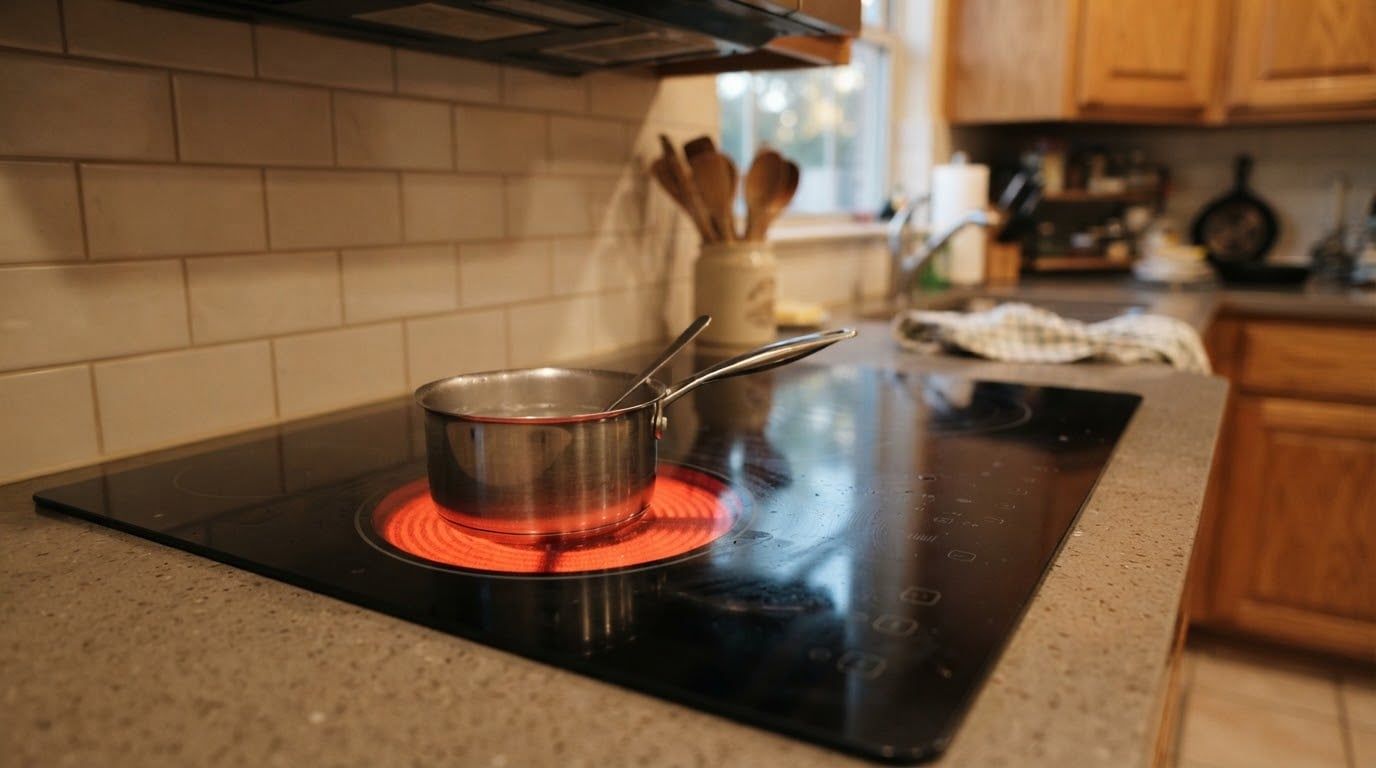
Gas, coil, glass and induction cooktop repair
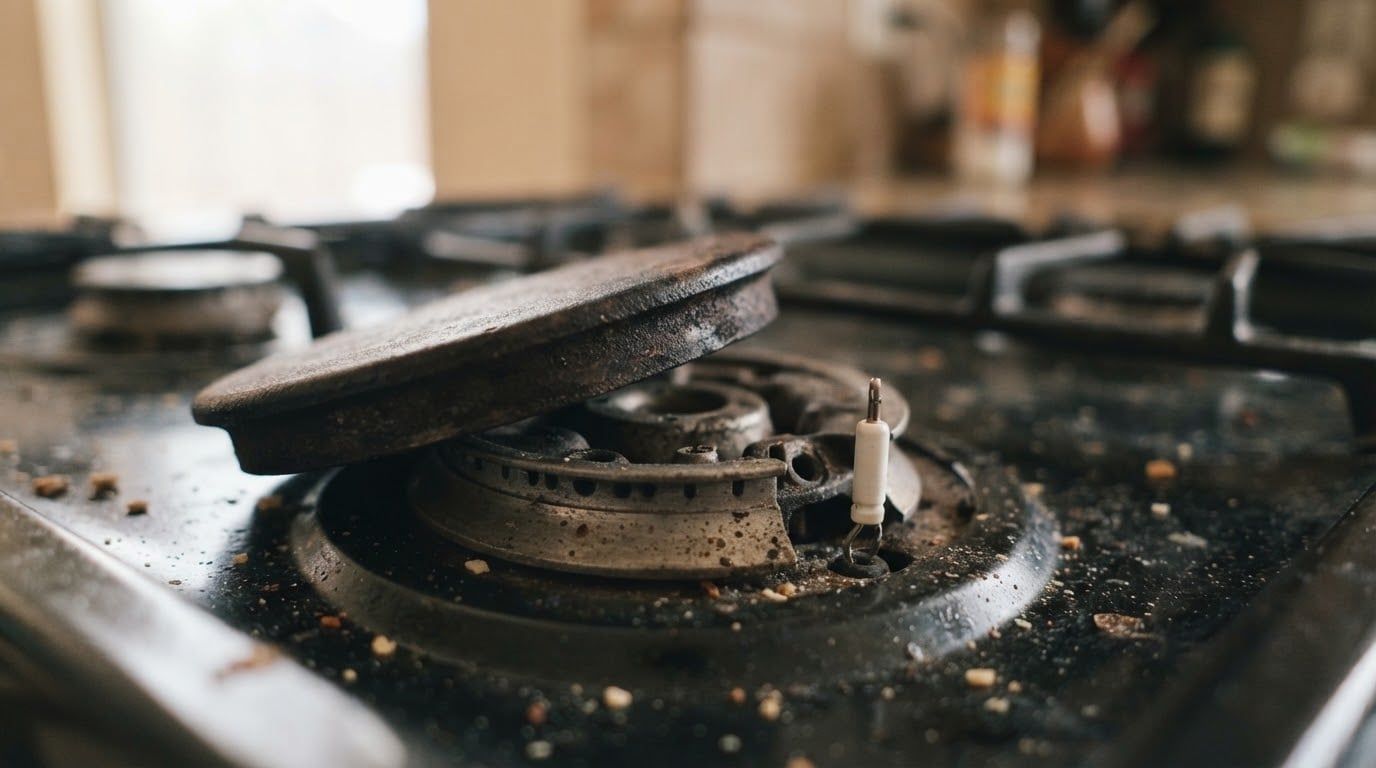
Say which kind you have when you call, because each one fails in its own place. A gas cooktop lights every burner with a spark igniter fed by a spark module, and a switch behind each knob tells the module when to fire. Water from a boil-over or a wet sponge is the classic reason the clicking starts and won't stop.
Electric coil tops are the simplest. Each coil plugs into a receptacle and runs off an infinite switch, and a scorched receptacle fails as often as the coil does. Radiant glass tops put similar elements under a sheet of ceramic glass, easy to wipe and costly to crack.
Induction cooktops don't heat the glass at all. A coil under each zone sets up a magnetic field that heats a magnetic pan directly, driven by a power board and cooled by a fan. With no element to burn out, a dead induction zone usually traces to the pan, a sensor or the board. Read us the brand as well, whether it says GE, Whirlpool, KitchenAid, Frigidaire, Samsung, LG or Bosch.
If the cooktop sits on a range, oven faults such as igniters, bake elements and sensors are covered on the oven and stove repair page.
Cooktop burners that click, stay cold or flash
- Every gas burner clicks, and the clicking will not stop
- Moisture around the igniters after cleaning or a spill, or a spark switch inside one knob that's stuck closed. Where all the igniters share one module, one wet or failed switch can make every burner spark. On the visit: The tech dries and checks each igniter, then tests the switch behind every knob to find the one holding the circuit closed.
- One gas burner sparks but never catches
- A burner cap sitting off-center, clogged burner ports, or a cracked igniter on that burner only. On the visit: The cap and ports get looked at before the igniter, since a misaligned cap is the cheapest answer.
- Coil or radiant element stays cold
- A burned-out element, a scorched coil receptacle, or a failed infinite switch for that position. On radiant tops a loose or burned wire under the glass does the same. On the visit: On a coil top the tech swaps the dead coil into a working receptacle of the same size. If it heats there, the receptacle or switch is the problem.
- Element glows full blast on every setting
- An infinite switch whose contacts have welded shut, or a stuck relay on an electronic control. On the visit: The switch for that burner gets tested first. Leave the burner off until then.
- Induction zone flashes or ignores the pan
- Often the pan. GE says cookware works on induction if a magnet sticks to the bottom, so aluminum, copper, glass and some stainless steel won't register, and the pan needs a flat bottom at least 5 inches across. A flat, magnetic pan that still won't register points to a sensor, the zone's coil or a power board. On the visit: Mention which pans you use. The tech rules the pan in or out before opening the cooktop.
Glass cracked or microwave door loose? Switch it off
A few faults mean the appliance should sit unused until the tech has seen it, even if it still heats.
- Cracked or pitted ceramic glass on a radiant, induction or gas-on-glass top. GE says not to use the cooktop until it is repaired, and on a range not to use the oven either, because the oven vents onto the cooktop.
- An element stuck on high. Turn it off at the knob, and at the breaker if it keeps glowing.
- A microwave door that doesn't close firmly or looks bent, warped or damaged. The FDA says not to run a microwave in that state.
- Sparks inside the microwave with nothing metal in it.
- Then call us with the brand and model number, and we will set a time for the tech to come out.
Microwave not heating
If the light comes on, the turntable spins and the fan runs while the food stays cold, the fault is usually on the high-voltage side: the magnetron, the high-voltage diode or the capacitor. A microwave that does nothing at all when you press Start often points to a door switch or the control board instead.
None of that is a job to open up at home. The high-voltage capacitor can hold enough charge to cause serious injury even after the cord is unplugged, so the tech discharges it before testing anything behind the outer case.
Over-the-range microwave fan repair
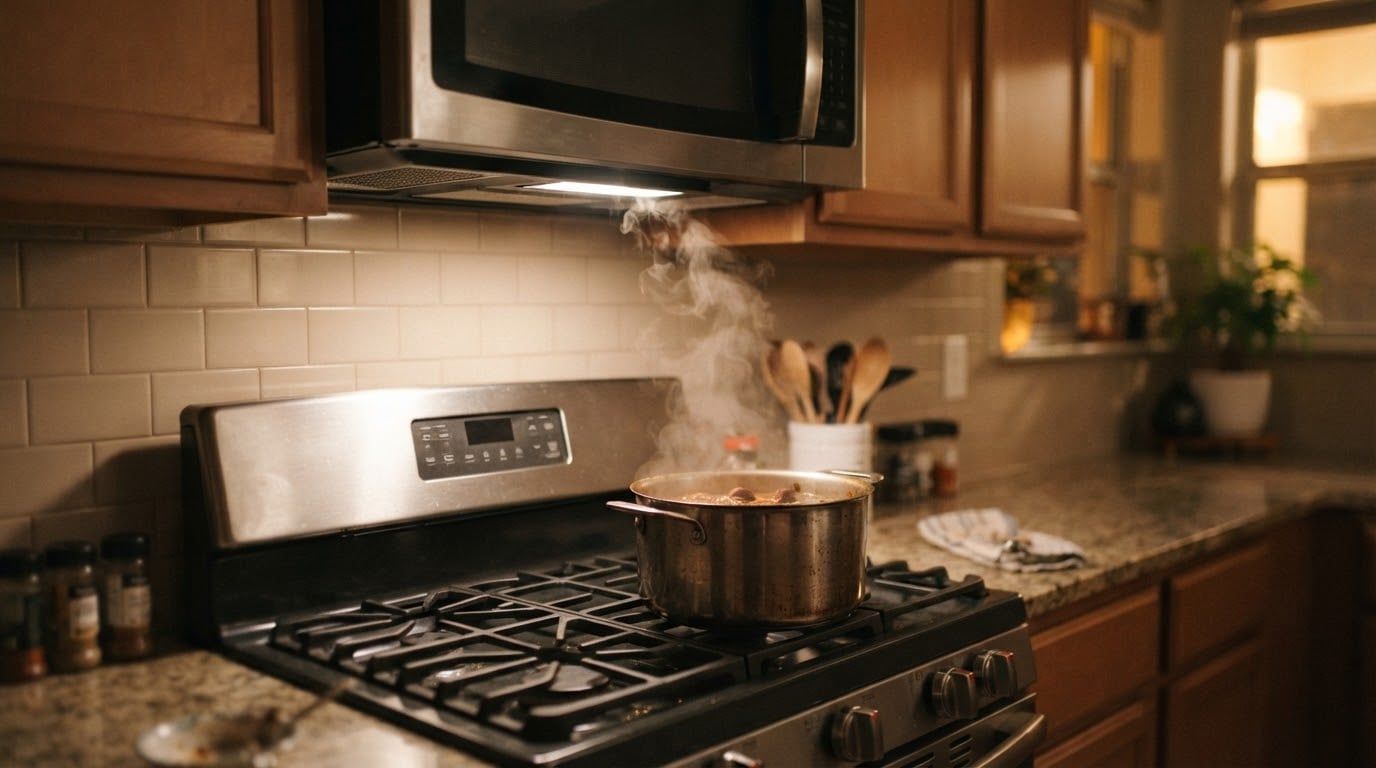
An over-the-range microwave is two appliances on one wall bracket: a microwave oven, and the range hood for the cooktop below. The hood half adds an exhaust fan, a cooktop light and filters to the list of things that fail. Mounted units also cost more to repair than countertop ones, partly because it takes two people to lift one off its plate and hang it back up. Tell us it's over the range when you call.
A weak fan isn't always the motor. GE says a charcoal filter belongs in any over-the-range microwave that isn't vented outside, and it's due for a change once it's loaded with grease, looks shiny or stops holding back cooking smells. The tech checks the charcoal filter and the metal grease filters before pricing a fan motor. Say whether the unit vents outside or recirculates, and clear the counter and cooktop beneath it before the visit.
Glass cooktop and microwave repair costs
Prices below are national averages with parts and labor in. A cracked ceramic top isn't patched. It gets replaced as an assembly, so the price swings a lot by model. Your tech prices your cooktop or microwave once the fault is found, and you get that price in writing to say yes or no to.
| Repair | Typical range | Notes |
|---|---|---|
| Gas burner igniter | $100 to $200 | |
| Coil element | $90 to $175 | Installed |
| Radiant element under glass | $120 to $330 | |
| Glass cooktop replacement, basic electric | $200 to $600 | |
| Glass cooktop replacement, induction | $300 to $1,000 | |
| Over-the-range or built-in microwave repair | $130 to $330 | Takes two people to take down and rehang |
| Countertop microwave repair | $80 to $180 | |
| Magnetron | $100 to $300 | |
| High-voltage diode | $80 to $170 | |
| Microwave door switch | $80 to $170 | |
| Microwave control board | $120 to $380 | |
| Exhaust fan motor (over-the-range) | $130 to $330 |
Other kitchen and laundry appliances are priced in the appliance repair cost guide.
Repair or replace a cooktop or microwave
Consumer Reports' rule of thumb is not to spend more than half the price of a new appliance on fixing the old one. Cooktops and microwaves usually come out on opposite sides of it.
Cooktops usually get repaired
- Igniters, coil elements and switches sit near the bottom of the price table
- A built-in cooktop fills a cutout in the counter, and a new one has to fit that same opening
- NAHB industry estimates give ranges about 13 years (electric) and 15 (gas)
- A cracked induction top near the high end of its range is the one case worth pricing a new unit against
Microwaves often fail the math
- The NAHB estimates give a microwave about 9 years, against 13 to 15 for a range
- A magnetron alone runs $100 to $300 by national averages, on an appliance with a shorter life than a range
- Over-the-range units are a closer call, since a new one also means taking down, mounting and venting
- A door switch on a newer over-the-range unit is usually worth doing; a magnetron on an old one often is not
Cooktop and microwave repair questions
Can a cracked glass cooktop be repaired?
Not by patching the crack. The ceramic top is replaced, usually as an assembly. National averages run $200 to $600 for a basic electric glass top and $300 to $1,000 for induction. Stop using the cooktop, and the oven below it on a range, until the tech has replaced it.
My microwave sparks inside. Is it safe to keep using?
No, stop using it until you know why. Metal is the first suspect: the FDA says metal pans and foil reflect microwaves and can damage the oven. With nothing metal inside, mention any scorched spot on the small cover panel inside the cavity or chipped paint on the walls when you call.
Can a damaged microwave leak radiation?
The door is the part to watch. The FDA explains that a federal standard caps leakage at 5 milliwatts per square centimeter, measured about 2 inches from the surface, over the oven's life. If the door won't close firmly or looks bent or damaged, the FDA says not to use it. The tech checks the hinges, latches and seals on the visit.
Is a countertop microwave worth repairing?
Often not. A countertop repair is the cheapest microwave line in the price table above, but the NAHB estimates give a microwave about 9 years of life, so the money goes into an appliance with less time left. A door switch on a fairly new unit can make sense. A magnetron on an older one usually doesn't.
Will a cooktop repair need a second visit?
Sometimes. A coil element, burner igniter or infinite switch is a small part, but a glass top or an induction board is usually ordered by model number, which means a return trip. Read us the brand, model and cooktop type when you call and we'll set the first visit.