
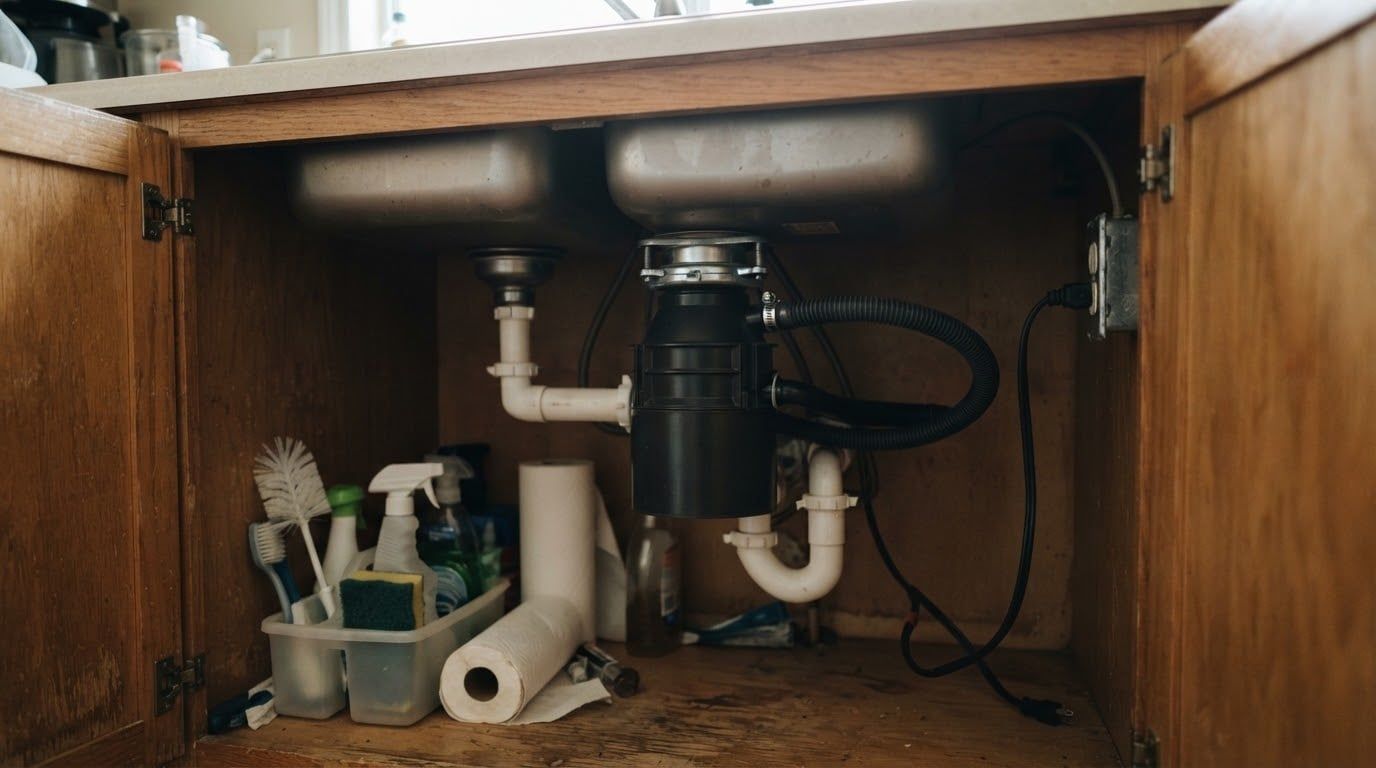
Garbage disposal hums but won't grind
A hum means the motor is getting power but the flywheel can't spin, usually because something hard is wedged between the turntable and the grind ring. Bottle caps, bones, fruit pits and broken glass are the usual pieces. Keep flipping the switch and the stalled motor heats up until the overload protector trips, so the hum turns into silence.
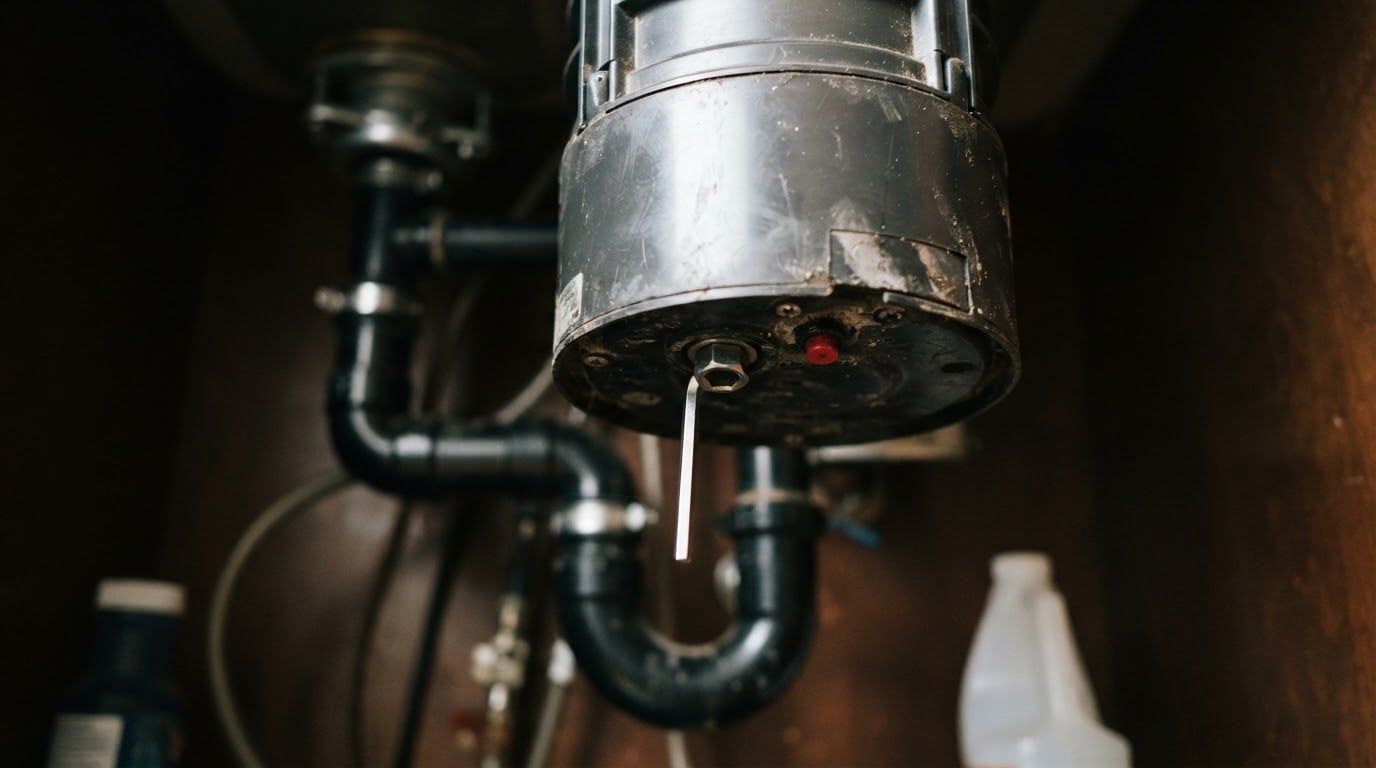
On the visit the tech turns the flywheel loose from below, through the hex socket in the bottom of the unit, and lifts out whatever jammed it. A jam that keeps coming back after being cleared is a different story: that disposer is usually due for replacement.
Tell us the brand and the horsepower printed on the label underneath, and whether the dishwasher drains through the disposal. Those answers let the tech bring the right parts, or a new unit, on the first trip.
Jammed or humming? Keep your hands out
Until the tech gets there:
- Turn the disposal off at the wall switch and leave it off.
- Don't reach into the drain opening for any reason. InSinkErator says never to put a hand in a disposal, power on or off.
- Stop flipping the switch to test it. Each try heats the stalled motor again.
- Skip chemical drain cleaner. It sits in the grind chamber and the trap, where the next person to open the drain gets splashed.
- Call us with the brand and what you heard when you flipped the switch, and we'll set the visit.
Garbage disposal with no power
A silent disposal is a power question first. InSinkErator's overload protector is a small square red button on the bottom of the unit, facing the floor, and it sits about a quarter inch lower than normal when it has tripped. After that the tech works back along the power: the breaker or fuse, a GFCI outlet in or near the sink cabinet, a plug that got knocked loose behind the cleaning supplies, and a wall switch that has worn out.
If power is reaching the unit and it still makes no sound, the motor has likely burned out. That spread, from a tripped button to a new disposer, is why the national range for a disposal that won't turn on runs from $70 to $550.
Leaking garbage disposal repair
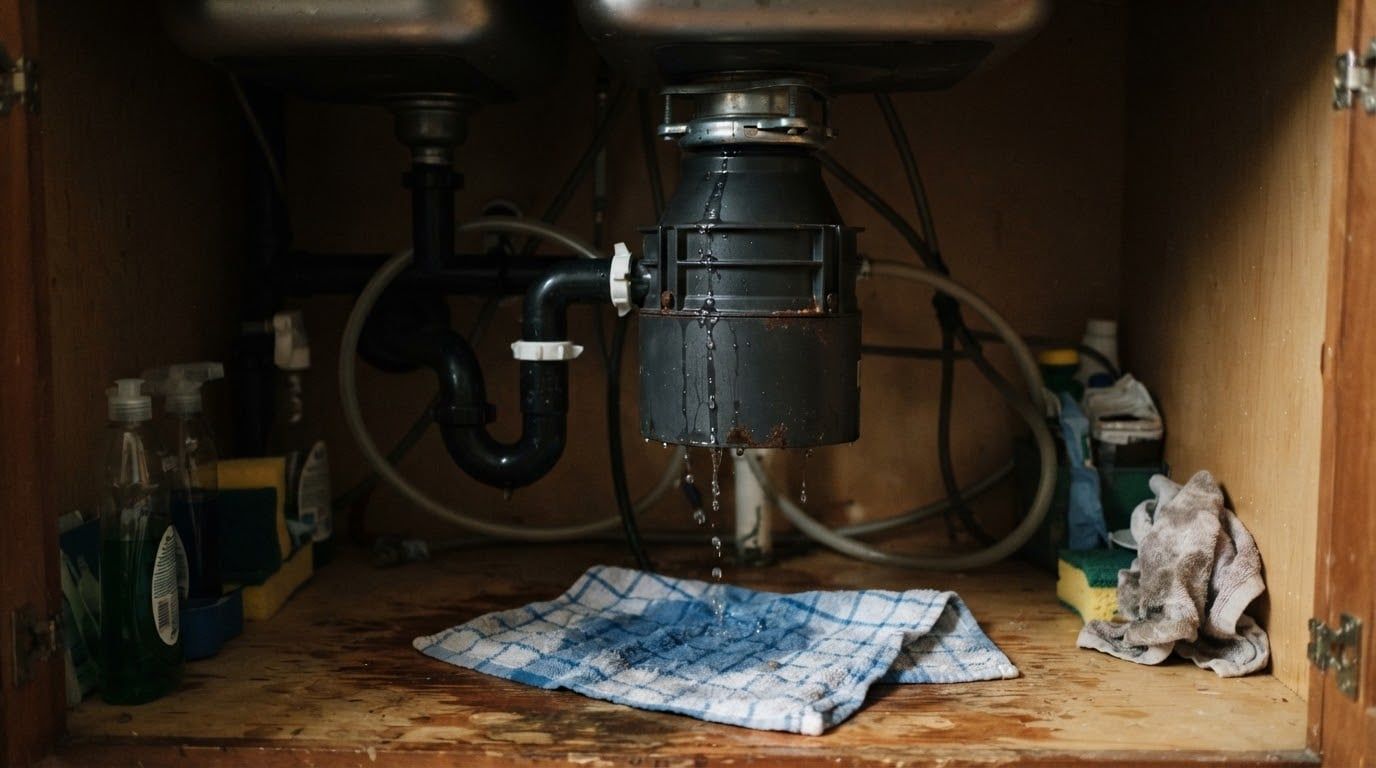
Where the first drop shows up tells the tech most of what the repair will be. The tech dries the whole unit, runs water through the sink and the disposal, and watches.
- Top of the unit, where it meets the sink
- The mounting assembly and sink flange. Plumber's putty dries out and mounting rings loosen with time. InSinkErator treats a leak here as an installation issue, and it usually ends in a reseal rather than a new disposer.
- Side, at the dishwasher hose
- The dishwasher inlet connection, often a hose clamp that has worked loose. A leak that shows up only while the dishwasher drains points here. On the visit: If the dishwasher also leaves water in its tub, mention it, since the shared drain may be partly blocked. More on that in dishwasher drain problems.
- Side, at the pipe running to the drain
- The discharge tube connection and its gasket. InSinkErator files this under installation fit too, and a new gasket or a properly seated tube is the usual fix.
- Bottom of the unit, or around the reset button
- Water truly coming out of the bottom, rather than running down from a connection above, usually means an internal seal or the housing has failed. On most household units that means a replacement. On the visit: Drips from the top often run down the housing and look like a bottom leak, so the tech dries everything and checks the top connections first.
Sink drains slow even though the disposal grinds
Grease is usually the reason. Houston Public Works says 70% of sewer overflows in Houston are caused by clogs from fats, oils and grease poured down drains and wipes flushed down toilets, and it handles twice as many grease-related overflows when temperatures drop. A disposer chops food, but grease goes straight through and coats the trap and the line past it.
InSinkErator says never to put fats, oils or grease in a disposer and to grind with a steady stream of cool water. If the sink stays slow with the disposal switched off, say so when you call. That points past the unit, into the trap or the drain line, and the tech checks there before pricing a new disposer.
Garbage disposal repair and replacement costs
National averages put a typical disposal repair at $100 to $250, averaging near $175, with a high end around $550. Your tech finds the cause first, then gives you the price for the repair or a new unit in writing so you can decide.
| Repair | Typical range | Notes |
|---|---|---|
| Service call with diagnosis | $70 to $130 | Covers the diagnosis, and often goes toward the repair labor |
| Unclog | $70 to $200 | Blockage in the unit or the drain line |
| Jam (hums, no grinding) | $75 to $175 | |
| Leak repair | $80 to $180 | Sink flange, dishwasher inlet or discharge connection |
| Won't turn on | $70 to $550 | Anything from a tripped protector or switch to a new unit |
| Replacement, installed | $200 to $550 | The disposer itself runs $100 to $300 |
National ranges, parts and labor unless noted. Other kitchen appliances are compared in the appliance repair cost guide.
Fix the old disposal or put in a new one?
A disposer is one of the cheaper kitchen appliances to replace outright, so a repair has to come in clearly under the price of a new one. National cost guides lean toward a new one once the unit is over 8 years old or the repair runs more than half the price of replacing it.
Usually worth repairing
- A jam with nothing broken behind it
- A leak at the sink flange, the dishwasher inlet or the discharge tube
- A dead wall switch, a tripped outlet or a loose plug
- A clog past the unit, in the trap or the drain line
Usually time to replace
- Water leaking from the bottom of the housing
- A motor that stays silent with power confirmed at the unit
- Jams that keep coming back after being cleared
- A repair quote closing in on the installed price of a new disposer
InSinkErator, Waste King and hardwired disposal repair
InSinkErator calls itself the world's largest maker of food waste disposers, and it has been part of Whirlpool Corporation since November 1, 2022. Whatever the brand, a disposer sits between the sink drain and the dishwasher line on one side and household wiring on the other, either a cord and plug or a hardwired connection. Say which one yours has, so the tech plans for it. Disposal calls come from Houston, Bellaire, Missouri City, Stafford and Sugar Land, and the service area list shows each ZIP. Don't see your ZIP? Call anyway and we'll check your address.
Garbage disposal repair questions
How long does a garbage disposal last?
About 12 years, in the NAHB's 2007 study of home component life. National cost guides give a range of 8 to 12 years and lean toward replacing a unit older than 8. Past that age, a leaking housing or a dead motor is rarely worth repairing. The repair or replace guide covers the rest of the kitchen.
Why does my disposal leak only when the dishwasher runs?
The dishwasher inlet connection on the side of the disposal is the usual spot, often a hose clamp that has loosened. The leak shows only when the dishwasher pushes water through. A new clamp or reseated hose is a small job, near the low end of the leak repair range in the cost table.
Why does my disposal smell even when it runs fine?
Food residue builds up under the rubber splash guard and around the upper lip of the grind chamber, where water doesn't reach. Grinding with plenty of cold water and letting it run a few seconds after switching off leaves less behind. A smell along with slow draining may mean the trap is holding food.
Is it cheaper to repair a disposal or replace it?
For a jam, a loose clamp or a bad switch, repair is cheaper. Most repairs run $100 to $250 by national averages. A leaking housing or a burned-out motor usually means a new disposer, and the installed price for that is in the cost table on this page. You'll see written prices for both before you decide.